

Why Collagen Production Declines After 25

Share
Collagen has become one of the most talked-about proteins in modern wellness—and for good reason. It is the most abundant protein in the human body, forming the structural framework of skin, joints, bones, muscles, and connective tissues. When collagen levels are high, skin tends to appear firm, hydrated, and resilient. But over time, the body’s ability to produce collagen naturally begins to change.
One of the most widely discussed milestones in the collagen ageing process occurs in the mid-twenties. From around age 25 onwards, collagen production gradually slows down. This is a completely natural biological shift, but understanding why collagen decreases can help us make smarter choices about nutrition, lifestyle, and daily rituals that support long-term skin health.
In this guide, we’ll explore the science behind collagen decline with age, the lifestyle factors that can accelerate the process, and practical ways to support collagen production naturally.
The Role of Collagen in the Body
Collagen acts as a structural scaffold throughout the body. It is responsible for providing strength and elasticity to tissues such as:
- Skin
- Hair and nails
- Bones and joints
- Tendons and ligaments
- Blood vessels
- Gut lining
In the skin specifically, collagen helps maintain firmness, elasticity, and hydration. It works alongside elastin and hyaluronic acid to keep the skin looking smooth and resilient.
According to the Cleveland Clinic, collagen accounts for around 30% of the total protein in the human body, underscoring its importance for structural health.
Because collagen is such a foundational protein, changes in its production can influence how the body ages—both internally and externally.
The Natural Collagen Loss That Begins After 25
The gradual decline in collagen production is one of the key drivers of the visible ageing process.
From the mid-twenties onwards, the body produces less new collagen each year, while existing collagen fibres begin to break down more quickly. This imbalance between production and breakdown is part of the normal collagen ageing process.
Research suggests that adults lose around 1% of collagen production per year.
Over time, this shift can contribute to common signs of ageing such as:
- Reduced skin elasticity
- Fine lines and wrinkles
- Thinner skin
- Slower wound healing
- Joint stiffness
While the process is inevitable, the rate at which collagen declines varies depending on genetics, environment, and lifestyle habits.
Understanding these factors is key to supporting healthy ageing.
Why Collagen Decreases With Age
Several biological mechanisms contribute to collagen decline over time.
1. Reduced Fibroblast Activity
Collagen is produced by specialised cells in the skin called fibroblasts. As we age, these cells become less active, meaning they produce fewer collagen fibres.
This slowdown is a major contributor to the collagen decline age phenomenon.
2. Hormonal Changes
Hormones play a significant role in collagen synthesis. Oestrogen, in particular, helps stimulate collagen production.
As hormone levels change with age—especially during perimenopause and menopause—collagen production can decrease more rapidly.
3. Increased Collagen Breakdown
Ageing also increases the activity of enzymes known as matrix metalloproteinases (MMPs), which break down collagen fibres.
When collagen breakdown outpaces collagen production, the structural integrity of skin gradually changes.
Lifestyle Factors That Accelerate Collagen Loss
While collagen decline with age is natural, certain lifestyle habits can accelerate the process.
Sun Exposure
Ultraviolet (UV) radiation is one of the most significant external causes of collagen degradation.
UV rays penetrate the skin and trigger the production of enzymes that break down collagen fibres. Over time, this process—known as photoageing—can lead to wrinkles and reduced skin elasticity.
Daily sun protection remains one of the most effective strategies for protecting collagen.
Chronic Stress
Stress influences collagen through hormonal pathways.
Elevated levels of the stress hormone cortisol can interfere with the skin’s repair processes and contribute to collagen breakdown.
Long-term stress may also impact sleep quality, which further affects skin regeneration.
High Sugar Consumption
Diet can also influence the collagen ageing process, particularly through a mechanism called glycation.
Glycation occurs when excess sugar molecules attach to proteins such as collagen and elastin. This process forms harmful compounds called advanced glycation end products (AGEs).
AGEs can make collagen fibres stiffer and less flexible, contributing to premature skin ageing.
Nutrition and Collagen Production
Although the collagen ageing process is natural, nutrition plays an important role in supporting the body’s ability to maintain healthy connective tissues over time.
Collagen itself is made from specific amino acids, primarily:
- Glycine
- Proline
- Hydroxyproline
These amino acids come from protein-rich foods such as fish, eggs, poultry, and dairy. However, collagen synthesis also relies heavily on supporting nutrients that help the body build and stabilise new collagen fibres.
Vitamin C
Vitamin C is one of the most important nutrients involved in collagen production. It helps stabilise collagen molecules and supports the activity of fibroblasts — the cells responsible for producing collagen in the skin.
Foods rich in vitamin C include:
- Citrus fruits
- Berries
- Kiwi
- Bell peppers
- Leafy greens
Zinc and Copper
Trace minerals such as zinc and copper also contribute to connective tissue formation and repair. These nutrients support skin structure and help maintain normal tissue integrity.
Sources include:
- Nuts and seeds
- Whole grains
- Shellfish
- Legumes
Supporting Collagen Through Daily Rituals
Alongside balanced nutrition, many people choose to incorporate collagen supplements into their routine as part of a long-term approach to skin, joint, and structural health.
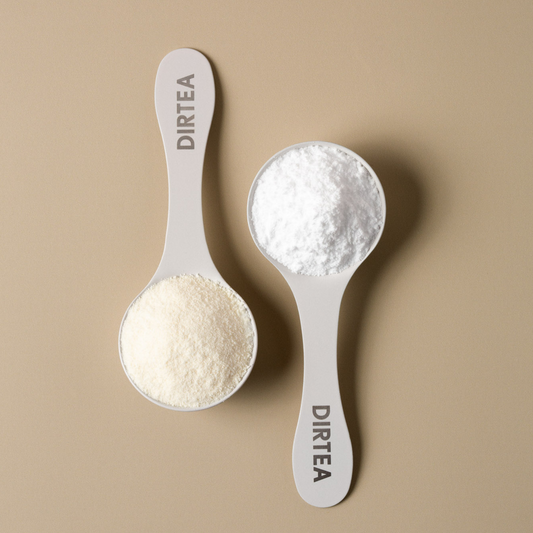
For example, DIRTEA Pure Essentials Collagen provides 5,000 mg of Type I and Type III hydrolysed collagen peptides per serving, designed to support skin, hair, nails, joints, and connective tissue as part of a balanced lifestyle.
Type I collagen is the most abundant form in the body and plays an important role in skin structure, while Type III collagen supports connective tissues and structural resilience.
Because the collagen is hydrolysed into smaller peptides, it mixes easily into drinks and can be absorbed more efficiently.
One of the simplest ways to integrate collagen into a daily routine is by adding a scoop to:
- Morning coffee
- Matcha or tea
- Smoothies
- Water or functional drinks
The powder is unflavoured and free from fillers, sweeteners, or additives, allowing it to blend easily into everyday rituals without altering taste.
Over time, small daily habits like this can complement broader lifestyle practices that support collagen health, including sun protection, balanced nutrition, good sleep, and stress management.
The Bigger Picture: Ageing as a Biological Process
The collagen ageing process is not something to fear—it’s simply part of how the body evolves over time.
What matters most is understanding the factors that influence collagen health and making choices that support long-term wellbeing.
By focusing on balanced nutrition, daily rituals, and lifestyle habits that protect skin health, it is possible to support the body’s natural collagen systems as we age.
Healthy ageing isn’t about stopping time—it’s about giving the body the nutrients and care it needs to function at its best.
FAQs
At what age does collagen decline start?
Collagen production typically begins to decline around the mid-twenties. From this point onwards, the body produces slightly less collagen each year.
Why does collagen decrease with age?
Collagen decreases due to reduced fibroblast activity, hormonal changes, and increased collagen breakdown caused by enzymes and environmental factors.
Can lifestyle habits affect collagen levels?
Yes. Sun exposure, smoking, high sugar intake, and chronic stress can accelerate collagen breakdown and contribute to premature skin ageing.
What nutrients help collagen production?
Key nutrients that support collagen formation include vitamin C, zinc, copper, and adequate protein intake.
Can collagen supplements support skin health?
Collagen supplements provide amino acids that are used as building blocks for connective tissues. They are often included as part of a broader routine that supports skin health.
References
Cleveland Clinic. (2023). Collagen: What it is, types, function and benefits. Cleveland Clinic. https://my.clevelandclinic.org/health/articles/23089-collagen
Myung, S.-K., & Park, Y. (2025). Effects of collagen supplements on skin aging: A systematic review and meta-analysis of randomized controlled trials. The American Journal of Medicine. https://doi.org/10.1016/j.amjmed.2025.04.034